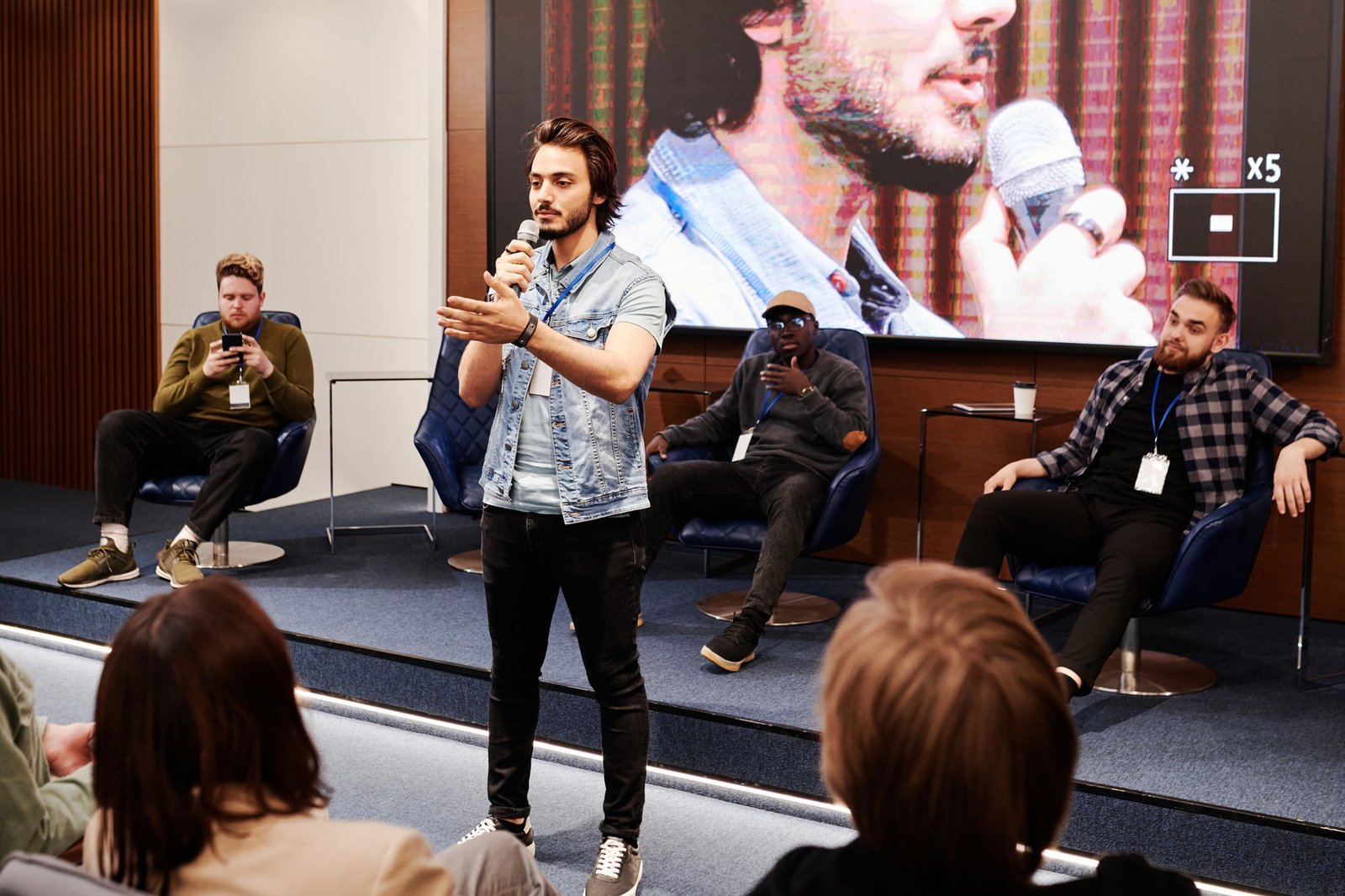


Two speakers pitch the same conference. Same experience level, same topic, similar fee range. One has a website that loads slowly, a bio written for LinkedIn, and no real way to prove they can hold a room. The other has a fast, structured site with a reel above the fold, a downloadable media kit, and individual pages for each keynote. The organizer has never met either of them in person. Guess which one gets the callback.
This is not really a story about websites. It is a story about what happens when a speaker treats their speaking career like the business it actually is, instead of a side activity that occasionally pays. The speakers who invest properly, in their site, their reel, their materials, consistently get booked faster than equally talented speakers who try to do it all for free. The reason is not mysterious. It shows up in exactly how organizers evaluate and decide.
This post breaks down where that investment actually pays off, why free tools quietly cost more than they save, and how to think about spending on your speaking business without wasting money on the wrong things.
Under 2 min
is how quickly meeting planners form a preliminary opinion of a speaker from their reel and website
Highest ROI
A complete, optimized speaker profile is described as a speaker’s single highest-return visibility investment
97%
of business leaders report a measurable return on investment from the keynote speakers they book
Organizers are already thinking in ROI. Are you?
Here is the part most speakers miss. The organizer deciding whether to book you is not judging your talent in isolation. They are increasingly required to justify the decision in terms of return on investment, with 97 percent of business leaders now reporting a measurable ROI from the keynote speakers they hire. That expectation has not stayed on their side of the table. It changes what they look for in you before a contract is even discussed.
An organizer scanning your website in under two minutes is not just checking whether you seem likeable. They are unconsciously asking whether booking you is a safe, defensible, ROI-positive decision they can justify to their own leadership afterward. A polished, structured, professional presence answers that question before it is asked out loud. A thrown-together one raises it, and doubt at this stage rarely gets resolved. It just quietly ends the conversation.

Where the investment actually pays off
Not every dollar spent on a speaking business earns its keep. These five are the ones that consistently do, because each one addresses a specific moment where an organizer decides whether to move forward or move on, the same moments covered in our guide on what organizers actually search for before booking a speaker.
The cost of free is just paid later, and quietly
A free website builder, a phone-shot reel, and a half-finished directory profile do not cost nothing. They cost bookings you never see, because an organizer who quietly moves on to another candidate rarely tells you why. That cost does not show up on a bank statement, which is exactly what makes it easy to ignore. It shows up as a booking calendar that stays thinner than it should, month after month, with no obvious single cause to point to.
This is not an argument for spending on everything. Plenty of speaker spending is truly wasted: elaborate merchandise nobody asked for, generic ad campaigns aimed at nobody in particular, tools bought and never used. The useful question before any purchase is not does this look professional, but does this remove a specific moment of friction or doubt for the organizer deciding whether to book me. The five investments above all pass that test directly. Most other speaker expenses do not.
Ask this before your next speaking business expense
- Does this remove a specific moment of doubt or friction for an organizer, or does it just look impressive to me?
- If I skip this, what does an organizer see instead, and would that cost me the booking?
- Am I spending here because it is truly high-leverage, or because it is easier than the harder work of outreach and delivery?
- Is this a one-time cost that keeps paying back, or an ongoing cost with no clear return?
Why do speakers who invest in their business get booked faster?
Organizers increasingly evaluate speakers through an ROI lens, with 97 percent of business leaders now reporting a measurable return on investment from the keynote speakers they book. A speaker with a professional website, a strong reel, and a complete media kit answers that ROI question before it is asked, since the materials themselves signal that booking this person is a safe, well-prepared decision. A speaker relying entirely on free tools and unfinished materials leaves that question open, and unresolved doubt at the evaluation stage quietly ends conversations rather than moving them forward.
Is a free website good enough for a keynote speaker?
A free or DIY website can technically exist and still fail the one job a speaker website has: converting an organizer’s interest into a booking within the short window they actually spend evaluating. The cost of a free site is rarely visible on a receipt. It shows up as bookings that quietly go to a better-presented competitor. A professional website is widely described as paying for itself within months rather than years once it is structured to convert consistently, which for a speaker often means a single additional booking covers the investment many times over.
What should a speaker spend money on first?
The highest-leverage early investments are a website structured around how organizers evaluate speakers, a reel that holds attention in its first ten seconds, and a complete profile on any directory or marketplace where organizers search by topic and fee range. These three are consistently described as the assets that most directly influence whether an organizer moves forward, because they are what gets evaluated earliest and most heavily in the decision. Spending here before anything else produces the clearest return.
How do I know if I am spending money on the right things as a speaker?
Test every expense against one question: does this remove a specific moment of friction or doubt for an organizer deciding whether to book you, or does it simply look impressive without changing that decision. A website that loads fast and states your value clearly passes this test. A reel that opens with real stage energy passes this test. Merchandise, generic advertising, and tools bought but never used usually do not. Spending selectively on what organizers actually evaluate produces a far better return than spending broadly on what merely feels productive.
Invest where organizers actually decide
StageNexa builds the exact asset that sits at the center of this decision: a speaker website structured around how organizers evaluate, compare, and book. Book a free call and we will look at whether your current site is helping you get booked faster, or quietly costing you the ones you never hear about.