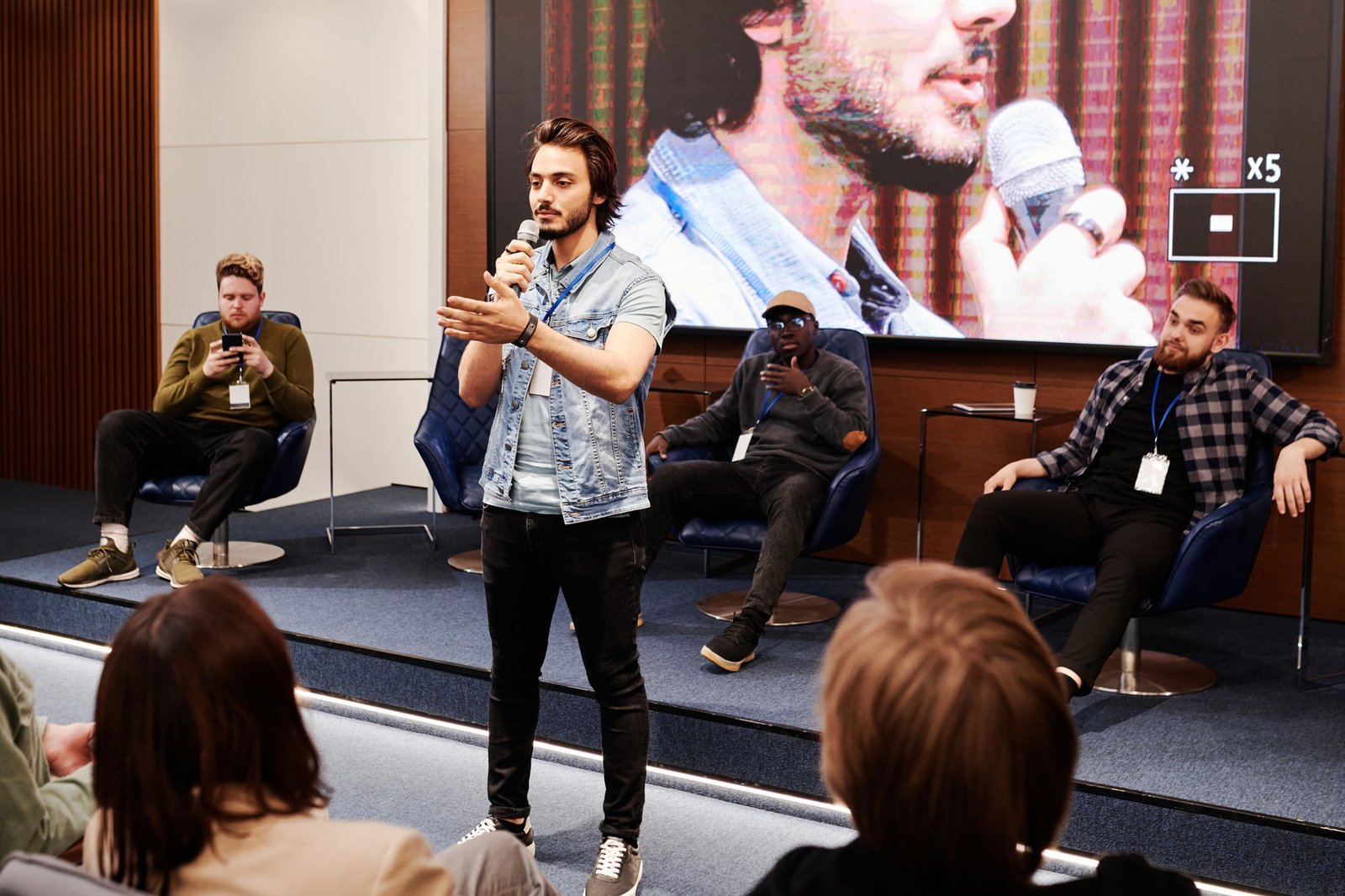

An event organizer opens your speaker reel with genuine interest. They have your website open in one tab and your one-sheet in another. They click play. Ten seconds later, without a word of explanation, they close the tab and move to the next name on their list.
This happens on speaker reels constantly, and almost never for the reason speakers assume. It is rarely about talent or stage presence. It is almost always about structure: what the reel shows first, how long it takes to get there, and whether the opening seconds answer the one question every organizer is silently asking. Industry guidance on speaker demo videos is blunt about this exact moment, calling it the 10-second rule: these are busy people, and you have ten seconds to hook them before they move on.
This post covers exactly what causes that ten-second exit, and what to fix first if your reel is losing organizers before it ever gets to your best material.
10 sec
is the window speaker reel guidance gives you to hook a busy organizer before they move on
2-3 min
is the ideal total length. Longer reels get scanned by their timeline before they are ever watched
3
questions every organizer is silently trying to answer in your first few seconds
The three questions your opening seconds have to answer
Event organizers are not watching your reel to learn your life story. According to speaker demo reel specialists, they are scanning for the answer to three specific questions: can this person hold a room, does their style fit our event, and is the production quality professional enough to represent us. Your opening seconds need to answer all three before the organizer has consciously decided to keep watching. A reel that opens with a slow title card, a logo animation, or a quiet introduction is spending precious seconds on none of these questions, and the organizer’s thumb is already moving toward the back button.
This is also exactly why the reel needs to be treated as a sales tool, not a biography. The most common mistake speaker reel coaches report is speakers trying to show everything they have ever done on stage, creating a lengthy showcase that dilutes impact instead of amplifying it. An organizer does not need your career history in the first ten seconds. They need proof, immediately, that you belong on their stage.
The six reasons speaker reels lose organizers in the opening seconds

What to fix first if you only have time for one change
If your reel is losing organizers early and you can only address one thing this week, fix the opening shot. Replace whatever currently plays in the first three seconds with your single strongest clip: visible energy, ideally a cut to genuine audience reaction within the first several seconds, and your voice speaking rather than music over stills. This one change addresses the majority of the reasons reels lose people early, and it can usually be done with existing footage through re-editing alone, without a full reshoot.
Once the opening is fixed, work backward through the list: check your audio quality, confirm the reel stays close to two to three minutes total, and make sure it sits above the fold on your homepage rather than buried behind a click. Each of these compounds with the others, but the opening shot is what determines whether an organizer ever sees the rest of it.
Watch your own reel like an organizer would
- Play it with the sound off first. Does the opening shot alone show energy and audience presence?
- Time how long it takes before you appear speaking on camera. Anything past 3 seconds is worth cutting
- Listen for any echo, background noise, or distortion in the first 10 seconds specifically
- Check the total length. If it runs past 3 minutes, identify what could be cut without losing impact
- Confirm the reel is visible on your homepage without scrolling or clicking through
Why do people stop watching my speaker reel so quickly?
Most speaker reels lose viewers in the first ten seconds because the opening fails to answer what an organizer is scanning for: proof of stage presence, audience engagement, and professional production quality. Common causes include a slow title card or logo animation before the speaker appears, a low-energy opening clip, no audience reaction shown early, rough audio quality, and a reel that tries to cover too many topics at once instead of matching one clear audience. Fixing the opening shot specifically, leading with the highest-energy clip available and cutting to real audience reaction early, addresses the majority of these exits on its own.
How long should a speaker demo reel be?
Two to three minutes is the widely recommended length for a speaker demo reel. Reels significantly longer than this get scanned by their timeline length before an organizer decides whether to watch, and a long reel filled with average material consistently performs worse than a short one built from two or three truly strong moments. Concise and well-edited outperforms comprehensive every time in this format, since organizers are evaluating fit and quality quickly, not reviewing a full career retrospective.
What should the first 10 seconds of a speaker reel show?
The first ten seconds should show the speaker actively speaking, ideally mid-delivery with visible energy, cut together with a genuine audience reaction shot such as laughter, applause, or visible engagement. Industry guidance on speaker demo reels calls this the ten-second rule: organizers are busy and will move on quickly if the opening does not immediately signal stage presence and audience connection. Title cards, logo animations, quiet introductions, and slow music-over-stills openings all delay this proof and cost attention that does not come back.
Should a speaker have more than one reel?
Yes, if the speaker covers truly distinct topics for different audiences. A single generic reel that tries to represent every topic dilutes the specific impression an organizer needs when evaluating fit for their event. Speakers with multiple signature keynotes benefit from a short reel matched to each topic, placed on that keynote’s dedicated page, the same way each topic benefits from its own page rather than a shared bullet list, as covered in our guide to keynote topic pages that get you booked.
Your reel deserves a homepage built to show it off
A perfectly edited reel still gets skipped if it loads slowly or sits buried behind a click. Every StageNexa speaker website places the reel above the fold, optimized to load fast on mobile, exactly where the ten-second window has a real chance. Book a free call and we will look at where your reel lives today and what is costing you those first ten seconds.