

Most speaker websites look credible enough at first glance. The design is clean, the reel plays, the bio is written, and there are a few quotes from happy audience members in a testimonials section. On the surface, nothing is obviously wrong.
But event organizers are not most visitors. They are professionals who evaluate dozens of speakers a month, and they have learned to read between the lines of what a website shows and what it carefully avoids. What looks credible to a casual visitor can look thin or unconvincing to an experienced planner.
These are the six credibility gaps that show up most consistently on speaker websites, the gaps that create hesitation in an organizer who was otherwise interested, and what to do about each one.
Credibility Gap 1
Testimonials from the wrong people
The mistake: Most speakers collect testimonials from audience members. After every event, a few attendees send messages saying it was life-changing or the best talk they have ever heard. These get screenshot and posted on the website and the speaker feels satisfied. The social proof box is ticked.
Why it creates doubt: An event organizer is not the audience. They are the professional taking the financial and reputational risk of booking you. When they land on your testimonials section, they are looking for evidence that another person in their position trusted you and was not let down. Audience praise tells them nothing about what it is like to work with you, whether you delivered on your promises, whether you were professional to deal with, or whether the event actually went well. Kristin Pearson, who spent years hiring speakers for conventions, has stated clearly that organizer testimonials were the first thing she looked for, and a site without them moved her immediately to the next option.
The fix: After every event, ask the organizer specifically for a short written quote. Ask about the experience of working with you, your professionalism, and how the audience responded. Two or three organizer testimonials will outperform twenty audience comments every time.
Credibility Gap 2
A bio that reads like a resume
The mistake: The bio starts with: “Jane is a keynote speaker, executive coach, and bestselling author with fifteen years of experience in leadership development.” It is technically accurate, completely generic, and reads like the opening of every other speaker bio on the internet.
Why it creates doubt: Event organizers read dozens of speaker bios every week. A list of titles and years of experience does not give them a reason to stop. The PCMA 2025 Trends Report found that audiences now expect human-focused, personalized experiences rather than credential lists. The same applies to the people booking those speakers. According to Bizzabo research, the ideal speaker website bio is 75 to 120 words. Most speaker bios are twice that length and half as memorable. What makes an organizer actually pause is something specific: an unusual background, a defining moment, a perspective that no one else has. That is what belongs in the opening line.
The fix: Cut your bio to 100 words maximum. Put the most human, specific, and differentiating thing about you in the very first sentence. Remove everything that does not directly explain why you are the right person for someone’s specific event. Nobody books a speaker because they have fifteen years of experience. They book them because something in the first two sentences felt exactly right.
Credibility Gap 3
A reel that is all highlight, no proof
The mistake: The speaker reel is a carefully edited four-minute video featuring the best thirty seconds from twenty different talks, dramatic music, crowd applause, standing ovations, and slow-motion shots of the speaker mid-gesture. It looks impressive. Every speaker reel looks impressive.
Why it creates doubt: Experienced event organizers know exactly what a sizzle reel is and what it is designed to do. As keynote speaker Khary Penebaker has noted, sizzle reels show the best ninety seconds from fifty different talks, edited with dramatic music and crowd shots, and every speaker looks amazing in them. What organizers increasingly want to see is evidence that the speaker can hold a room for a sustained period. They want to watch minute twenty of a talk, when the novelty has worn off and the speaker is carrying the room on content alone. A highlight reel gives them nothing to assess in that regard.
The fix: Keep the highlight reel as a hook on your homepage. But also include at least one full-length talk or a significant unedited excerpt of ten to fifteen minutes, accessible somewhere on your site. This is what serious organizers look for when they want to move past the marketing and see the actual speaker. Most of your competitors do not provide it.
Credibility Gap 4
Headshots but no stage photos
The mistake: The speaker website has a professional portrait, usually a clean headshot against a plain background or office setting. It looks polished. The speaker looks credible. But there is nothing showing them in front of an actual audience.
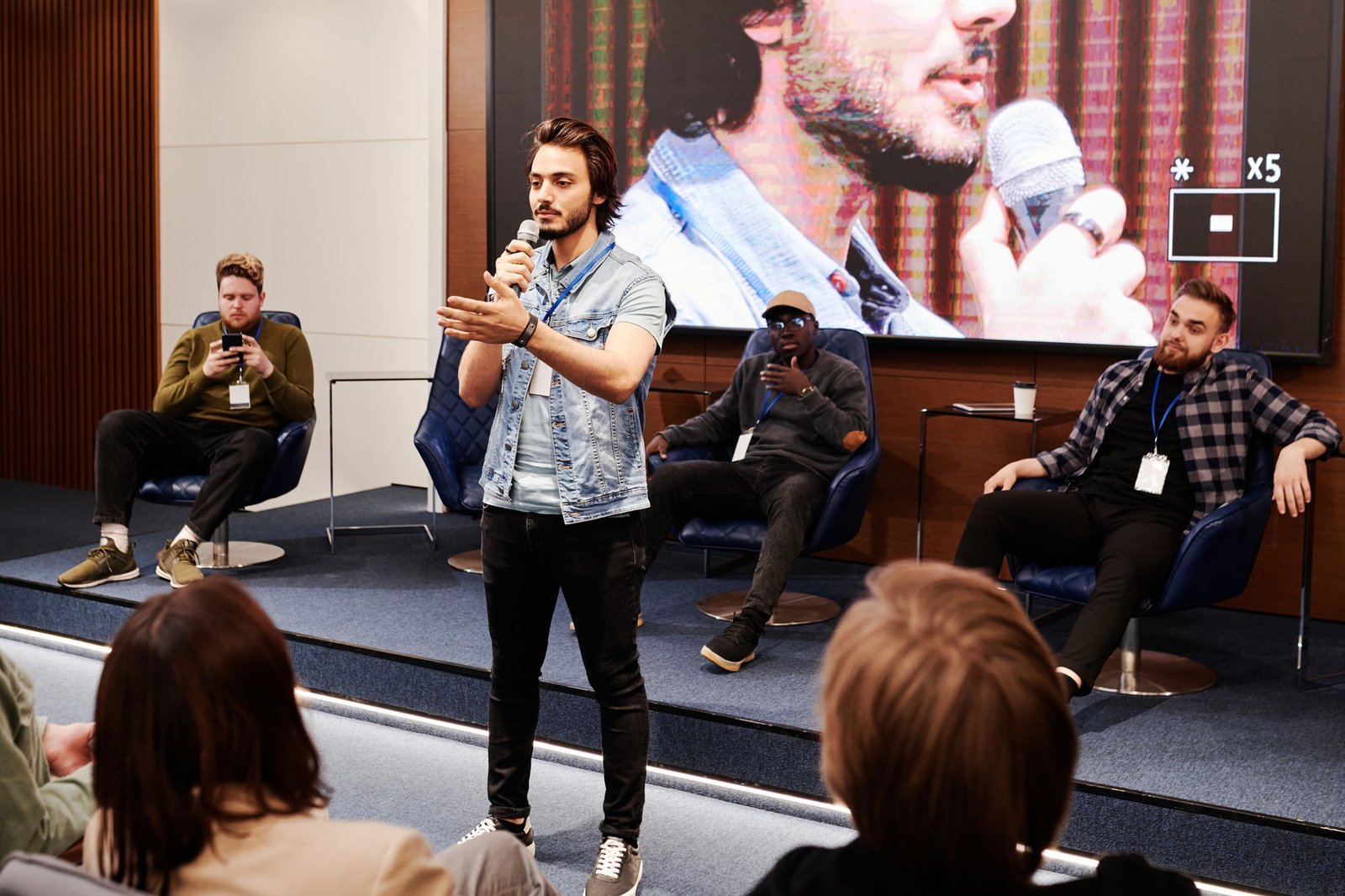
Why it creates doubt: A portrait photo shows who you are. A stage photo shows what you do. An organizer looking at a headshot is looking at any professional who owns a suit and hired a photographer. An organizer looking at a photo of you in front of eight hundred people is looking at evidence. Content Fudge, analyzing top speaker websites, found that a powerful on-stage photo can instantly convey speaking experience in a way that headshots simply cannot. Simon Sinek and Tony Robbins do not just have portraits on their websites. They have images that position them on large stages in front of large audiences. The visual message is immediate and specific.
The fix: If you do not have professional stage photography yet, contact the event photographer at your next speaking engagement or ask the organizer for access to event photos. Even a high-quality mobile shot from a trusted person in the audience beats no stage evidence at all. For your next significant booking, invest in having someone capture you on stage. It will pay for itself many times over.
Credibility Gap 5
No downloadable media kit
The mistake: When an organizer visits the speaker website and decides they want to book this person, they need to move quickly. They need a high-resolution headshot. They need a 50-word bio and a 150-word bio. They need the speaker’s introduction script for the emcee. They need technical requirements. They need topic summaries. They need to know what format they can book and what the speaker needs in the room. None of this is on the site.
Why it creates doubt: The absence of a media kit creates friction at the exact moment an organizer is ready to act. Instead of moving forward, they have to email the speaker with a list of requests. The speaker takes time to respond. The momentum of the decision cools. According to Content Fudge’s analysis of how top speakers operate, a downloadable media kit including bio, topic summaries, headshots, introduction script, AV requirements, and contact information is considered non-negotiable for professional speaking businesses. Most speakers at every level do not have one. It is one of the clearest signals that separates a professional who speaks from a professional speaking business.
The fix: Create a single PDF media kit. Include a short bio (around 75 words) and a longer version (around 150 words), two or three topic summaries, two or three high-resolution headshot downloads, your emcee introduction script, your technical requirements, and your booking contact details. Put the download link on your speaking page, clearly labeled, above the fold. Make it impossible to miss.
Credibility Gap 6
No third-party validation
The mistake: The speaker has positive testimonials, a professional bio, and a solid reel. But there are no company logos from events they have spoken at, no media mentions, no award badges, no association memberships, no author credentials from recognizable publishers. The credibility comes entirely from what the speaker says about themselves and what their clients say about them.
Why it creates doubt: Third-party validation is categorically different from testimonials. Testimonials are first-person statements from people who experienced you. Third-party validation is recognition that external bodies with standards and gatekeeping have conferred on you independently. A feature in a respected publication. A speaker recognition award. An invitation to a TEDx stage. A book published by a major house. Membership of a professional association. These cannot be bought or self-claimed. According to Content Fudge’s analysis, past client logos from recognizable companies are among the fastest credibility signals on any speaker website because visitors subconsciously connect your name to organisations they already trust.
The fix: Identify every piece of third-party validation you have received and make it visible on your website. Logos of companies you have spoken for. Media features. Awards. Published books. Conference names. Association memberships. If you are early in your speaking career and have very few of these yet, be honest about where you are and lead with the depth and specificity of your subject matter expertise instead. Do not try to fake credibility with vague references. Earn the third-party signals and add them as you do.
Check these six things on your website right now
- Do you have at least two testimonials specifically from event organizers, not audience members?
- Is your bio under 120 words and does it open with something specific and human rather than a job title?
- Do you have at least one full-length or extended unedited video of you speaking, not just a highlight reel?
- Do you have professional stage photography showing you in front of a live audience?
- Do you have a downloadable media kit with headshots, bios, topic summaries, and an introduction script?
- Do you have visible third-party validation: media logos, company logos, award badges, or conference names?
Every no is a credibility gap that is quietly reducing the number of organizers who move from interested to in touch.
What kind of testimonials should a keynote speaker have on their website?
The most valuable testimonials for a speaker website come from event organizers and corporate clients, not audience members. Audience testimonials confirm that the talk was enjoyable. Organizer testimonials confirm that the speaker was professional to work with, delivered on their promises, and created the impact the event needed. Organizers reading your site want to see evidence from someone in their position, not from someone who attended the event. A ratio of at least two organizer testimonials to every five audience quotes is a reasonable starting point.
How long should a keynote speaker bio be on their website?
According to Bizzabo research, the ideal speaker website bio is 75 to 120 words. Most event websites work best with this length because organizers and potential attendees scan rather than read in full. A shorter bio forces you to choose what actually matters and leads to a more compelling first impression. You should also have a longer version of around 150 to 200 words available in your media kit for situations where a fuller introduction is needed.
What should a keynote speaker media kit include?
A professional speaker media kit should include a short bio (around 75 words) and a longer version (around 150 words), two or three high-resolution headshot images, two or three keynote topic summaries in one to two sentences each, an emcee introduction script of around 100 to 150 words, your technical and AV requirements, and your booking contact details. All of this should be in a single downloadable PDF so that an organizer can get everything they need in one click without having to follow up with additional requests.
Want to know exactly which of these gaps are on your speaker website?
At StageNexa we audit and rebuild speaker websites specifically to close these credibility gaps. Book a free call and we will go through yours honestly and tell you what is costing you bookings.