
Ask ten speakers whether they need a website when their LinkedIn is already getting attention, and most will hesitate. LinkedIn is where the DMs come in. LinkedIn is where organizers seem to find them. Building a whole separate website can feel like duplicate work for a channel that already appears to be doing the job.
The honest answer is that LinkedIn alone has a ceiling no amount of effort can raise, and mistaking LinkedIn attention for a complete booking system is what causes speakers to under-invest in the one asset that actually converts that attention into a confirmed stage. LinkedIn and a speaker website do different jobs in the booking journey, and neither one replaces the other. But when you look closely at what each platform actually controls, one of them has a structural ceiling the other does not.
This post breaks down exactly what each channel is good at, where each one quietly fails an organizer, and which one actually deserves your time and budget first.
Rented
LinkedIn is a platform you use. Connect and Message are their buttons, not yours
Owned
A speaker website is the one asset in your entire online presence you fully control
Both
The strongest speaker presences use LinkedIn to reach people and a website to convert them
What LinkedIn Actually Does Better
LinkedIn earns its place in a speaker’s strategy honestly. When an organizer is doing early research on a candidate, LinkedIn is one of the first places they check, and its network effects make that discovery mechanism impossible to fully replace with a standalone site. Every connection, every post, every comment compounds your visibility inside a system no personal website can access. LinkedIn profiles also rank strongly in Google search results, which means a well-built profile often shows up directly under your name search alongside your website, not instead of it.
It is also where organizers watch you think in public. Consistent, substantive posts show current expertise between engagements in a way a static website page cannot. An organizer scrolling your recent posts gets a sense of how you talk, what you care about, and whether your perspective is still sharp, which is exactly the kind of soft signal that builds trust before a single email is exchanged.
Where LinkedIn quietly stops working for a speaker
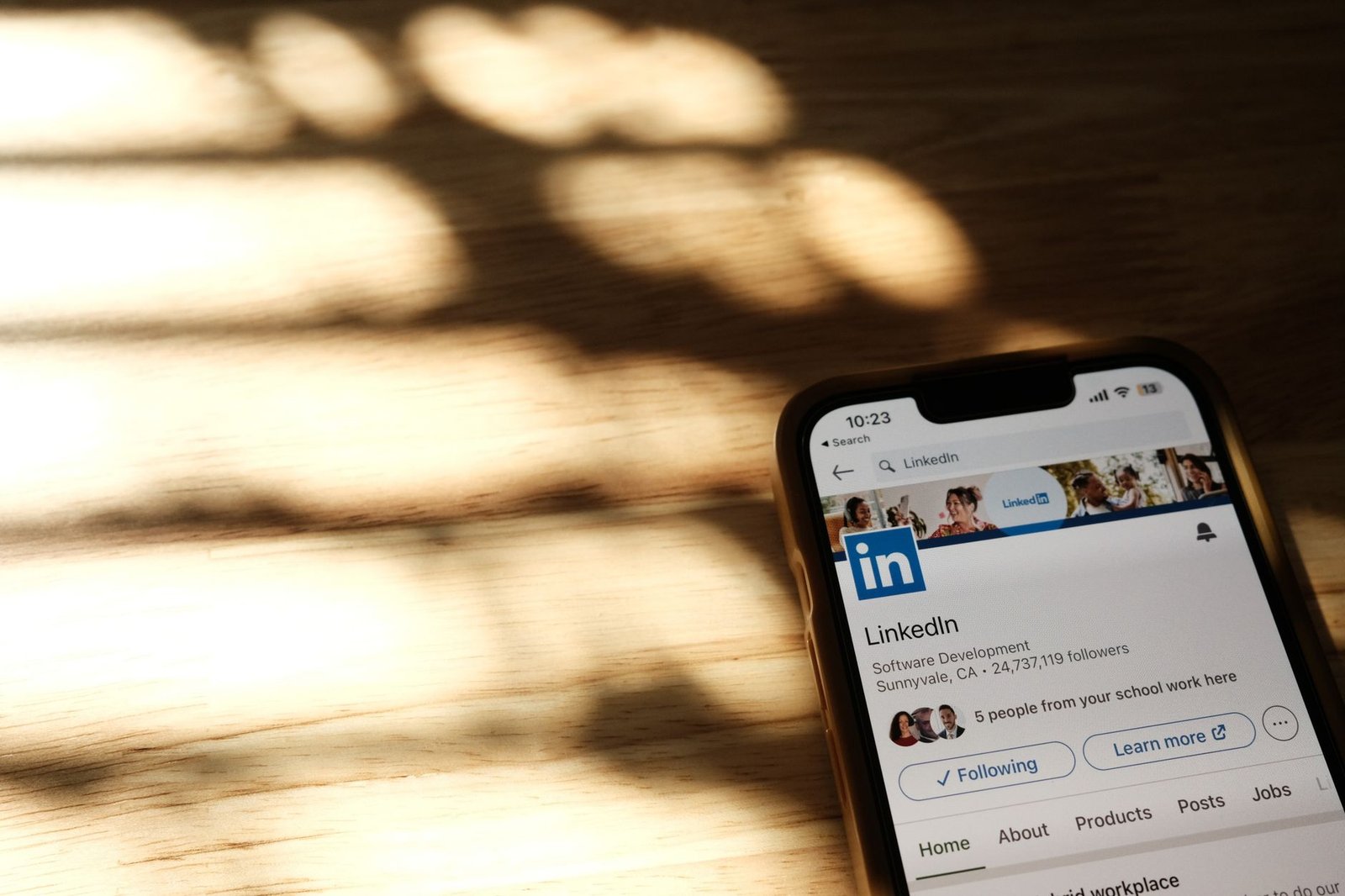
The same platform that earns organizer trust is still a platform you do not own. Connect and Message are LinkedIn’s buttons, not yours. Even where LinkedIn offers scheduling or contact options, they run inside LinkedIn’s interface, under LinkedIn’s design and rules, not a conversion path a speaker builds and owns. Every visitor you send there is also one click away from an ad, a job alert, or a competitor’s profile, which means your own network is quietly working to distract the very organizer you are trying to convert.
A LinkedIn profile also was not built to hold everything a real evaluation requires. There is no dedicated page per keynote topic organized the way an organizer needs to compare and forward it, no proof structured talk by talk, and far less of the structure AI tools like ChatGPT favor when an organizer asks for speaker recommendations in your niche. As covered in our guide on keynote topic pages that get you booked, this structure is what actually moves an organizer from curious to confident, and LinkedIn was never built to hold it.
There is also a control problem that has nothing to do with content. LinkedIn changes its algorithm, its layout, and its rules on its own schedule, and your profile lives entirely at its mercy. A platform update in 2026 shifted organic reach for many professionals overnight, through no fault of anything they posted. A website does not do that to you. The content you build stays exactly where you put it, working the same way a year from now as it does today.
What a speaker website does that LinkedIn structurally cannot
A speaker website is the one asset in your entire online presence that you fully control. The layout, the conversion path, the structure, and the message all answer to you and nobody else. When an organizer arrives through a referral, a Google search, or an AI recommendation, what they see is entirely built for the decision they are trying to make, not shaped by a platform optimizing for its own engagement metrics.
This ownership is what makes the individual keynote topic page possible. A dedicated page per talk, structured with the audience it serves, the outcome it delivers, and proof specific to that talk, gives organizers exactly what they need to forward a link to their committee, something a single LinkedIn profile covering every topic at once cannot replicate. It is also why a website is the foundation for showing up in AI search. As covered in our post on what organizers actually type into Google and ChatGPT before booking, tools like ChatGPT synthesize answers from pages they can retrieve and cite directly, and a structured website gives them far more to work with than a single social profile ever could.
A website also converts differently. About half of event planners now expect to use AI tools somewhere in their planning workflow, and those tools favor content that is specific, structured, and citable, exactly the format a well-built speaker website is designed to deliver. Your inquiry form, your media kit, your reel placement, all of it exists to move a visitor toward booking you, not toward staying inside somebody else’s platform.
The honest verdict: which one actually books you more stages
A speaker website wins this comparison, and here is the precise reason why. LinkedIn is a genuinely useful discovery and relationship-building channel. It puts you in front of organizers who have never heard your name, and it lets you demonstrate current thinking in a format people actually engage with. But discovery without conversion produces attention, not bookings. A speaker website is where the organizer who is seriously considering you actually verifies credibility, compares you to other candidates, and finds everything their committee needs to approve the booking. That is the step where stages get confirmed, and it is a step LinkedIn cannot own.
The speakers who consistently fill their calendars treat the website as the foundation and LinkedIn as the channel that feeds it. They use LinkedIn to reach people and rely on the website to actually convert them, exactly the two-channel system covered in our post on why speakers booked through LinkedIn still need a website. A LinkedIn post reaches your network today. A well-built website page keeps working long after that post has scrolled out of everyone’s feed.
If you had to choose where to invest first, the honest answer is the website, for one structural reason: LinkedIn cannot be improved past its own ceiling. You cannot add a topic page, a media kit, or an AEO-structured FAQ to a LinkedIn profile no matter how much time you spend on it. A website has no such ceiling. Every improvement you make compounds, and none of it can be changed or removed by a platform update you did not agree to.
Where to check your own setup
- If someone searches your name today, does your website or your LinkedIn profile appear first, and does either one actually convert?
- Does your LinkedIn profile send interested organizers anywhere, or does the conversation simply end in a Connect request?
- Do you have a dedicated page for each keynote topic, or does LinkedIn hold all of your topics in one bio?
- If LinkedIn changed its algorithm tomorrow, would your booking pipeline survive?
Do speakers need both a website and a LinkedIn profile?
Yes. LinkedIn and a speaker website serve different parts of the booking journey and neither replaces the other. LinkedIn is the stronger discovery channel, putting a speaker in front of organizers who have not heard their name and demonstrating current expertise through regular posts. A speaker website is the stronger conversion and evaluation channel, giving organizers dedicated topic pages, a downloadable media kit, and a structure that AI search tools can cite. The most consistently booked speakers use LinkedIn to reach people and a website to convert them into confirmed engagements.
Can a LinkedIn profile replace a speaker website?
No. A LinkedIn profile has no dedicated page per keynote topic organized for how organizers actually compare and forward speakers, and any scheduling or contact options run inside LinkedIn’s own interface rather than a conversion path the speaker designs and owns. It also cannot be structured for AEO or cited the way a website page can be when AI tools like ChatGPT answer an organizer’s question about speaker recommendations. LinkedIn is an effective discovery and relationship channel, but it has a structural ceiling a personal website does not share.
Which platform should a speaker invest in first, LinkedIn or a website?
A speaker website, for one structural reason: LinkedIn cannot be upgraded past its own limits. A speaker cannot add a dedicated topic page, a media kit, or AEO-structured content to a LinkedIn profile no matter how much effort is invested. A website has no such ceiling, and every improvement made to it compounds over time rather than being subject to a platform update outside the speaker’s control. LinkedIn remains valuable for reach, but the asset that converts organizer interest into a booking is the website.
Does LinkedIn help a speaker rank in Google or AI search?
LinkedIn profiles do rank well in Google, often appearing under a speaker’s name search alongside their website rather than instead of it. However, for AI tools like ChatGPT and Perplexity that synthesize answers to detailed booking briefs, a structured speaker website with dedicated topic pages gives these tools far more specific, citable content to work with than a single social profile covering every topic at once. Both channels contribute to visibility, but the website carries more weight for the specific, structured queries organizers increasingly run through AI tools.
Give your LinkedIn reach somewhere to convert
StageNexa builds speaker websites designed to work alongside LinkedIn, not instead of it: dedicated topic pages, a downloadable media kit, and a structure built for both Google and AI search. Book a free call and we will look at how your current LinkedIn and website work together, and where the gaps are costing you bookings.