

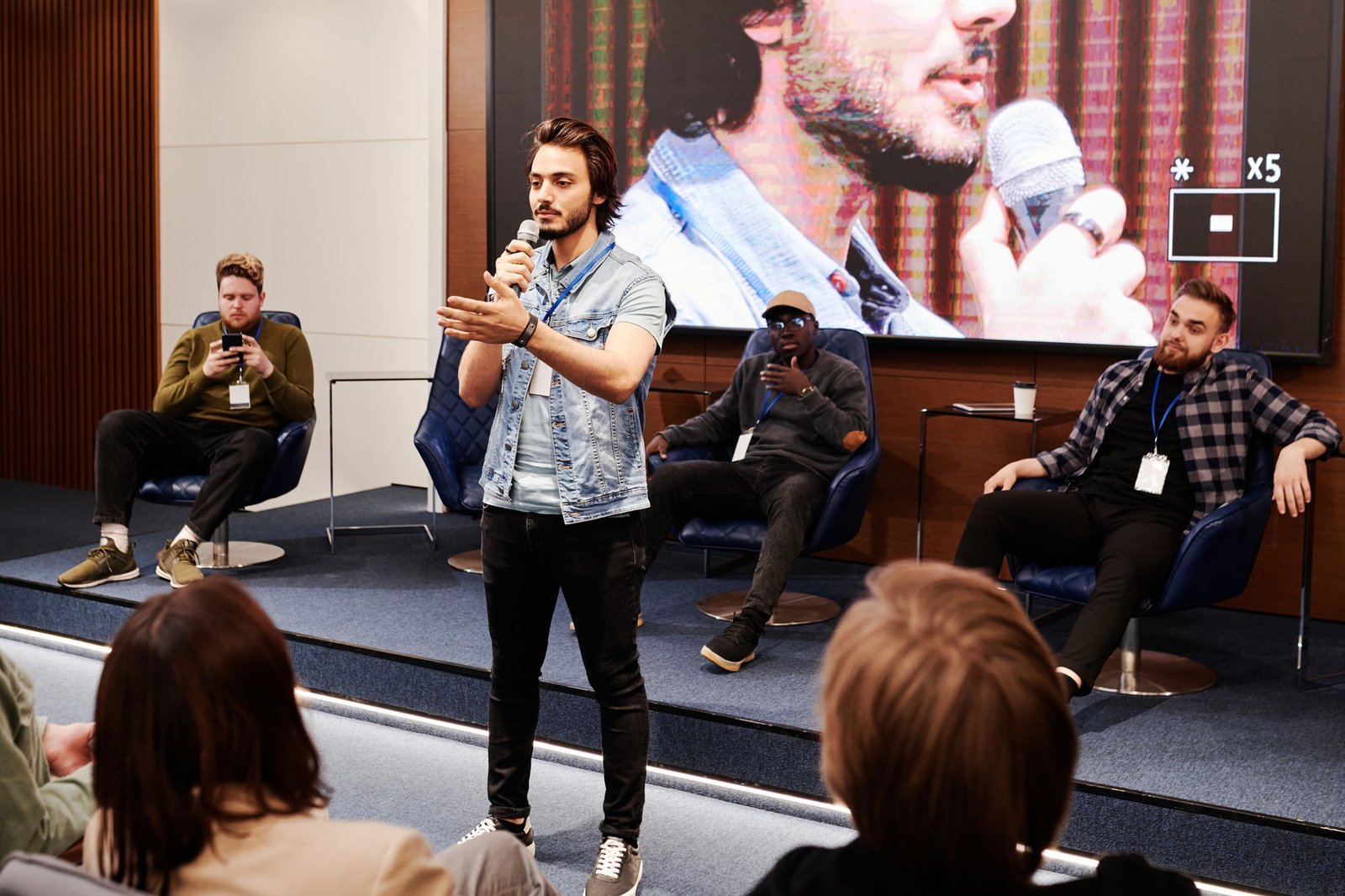
Every keynote speaker eventually faces the same decision: who actually builds the website. It sounds like a small choice compared to the topics, the fee, the calendar. It is not. The website is the one asset an organizer evaluates before they ever speak to you, and who builds it determines whether that evaluation works in your favor or quietly against it.
Your website should book stages for you. That is the whole premise this business is built on, and this post is our honest case for why StageNexa is the right choice to build it: what truly sets a specialist apart from a generalist or a DIY tool, what every project actually includes, and why the answer holds regardless of what kind of speaker you are. The specifics of your topic change. The structure that gets you booked does not.
570+
speaker websites built in 6 years, one niche, no restaurant sites or law firms mixed in
10 seconds
is the window every StageNexa build is designed to win an organizer’s trust within
1 industry
This is the only thing StageNexa builds. Not a side offering. The whole business
The case for hiring a specialist, not a generalist
Web design research is consistent on this point: specialized agencies outperform generalists within their focus area because depth compounds in a way breadth cannot. A SaaS-focused agency understands trial conversion. An ecommerce specialist understands checkout psychology. The same logic applies directly to speaker websites. Understanding how an event planner evaluates a keynote proposal, what a committee needs to see before approving a booking, and why a testimonial from an organizer carries more weight than one from an audience member, exactly the pattern covered in our guide on how organizers decide between similar speakers, is not general web design knowledge. It is industry knowledge, built one project at a time, and it does not transfer from a portfolio of restaurant sites and law firm pages no matter how talented the designer is.
A generalist web designer sees a speaker as one more client type among many: a business site this month, a nonprofit the next, a speaker after that. Each project starts closer to zero. A specialist starts from 570+ prior projects worth of pattern recognition: which headline structures organizers respond to, which page an inquiry actually starts on, what a media kit needs to contain to remove the last excuse to wait. That gap does not show up in a portfolio screenshot. It shows up in whether the site converts.
Even if you are a different type of speaker entirely, this still applies to you
Keynote speaker is the term used most often on this blog, but the structure underneath it is not limited to one label. Whether you speak as a TEDx speaker, a motivational speaker, a leadership or business speaker, an AI and technology speaker, a wellness or resilience speaker, a DEI speaker, a futurist, or you are a coach, mentor, consultant, or author moving onto paid stages, the underlying decision an organizer makes about you is the same one. They are scanning for credibility, fit, and proof within a very short window, and the site structure that earns that trust does not change by niche.
This is not a theoretical claim. The range of speakers StageNexa has actually built for makes the point directly: a behavioral scientist and published author balancing a podcast and speaking calendar, a neuroscience translator building a knowledge platform instead of a marketing site, two crisis advisory founders positioning themselves as the only certified specialists in their region, a meditation teacher and leadership author, a mindset coach speaking on creativity and emotional intelligence, and the co-founders of a luxury wellness retreat platform running both corporate programs and international retreats. Different topics, different countries, completely different audiences. The same underlying architecture got every one of them to a site organizers trust within seconds.
Several of these projects also needed multilingual builds and GDPR-compliant structures for European clients, which matters if you speak internationally or primarily to a non-English-speaking market. Only your topics, your proof, your positioning, and sometimes your language change. The architecture underneath stays the same, which is exactly why this applies to you regardless of which of those labels fits you best.
What actually changes when you choose a specialist over anything else available
There are broadly three paths a speaker takes when they need a website: a generalist freelancer or agency who builds a bit of everything, a do-it-yourself AI builder or template platform, or a specialist who works exclusively inside the speaking industry. Each path has a real, honest tradeoff.
Every StageNexa build includes
Beyond the process and the industry knowledge, here is exactly what is built into every project, regardless of which type of speaker you are or which package you choose.
“StageNexa has been a true miracle for our business. The vision and concept development that we’ve achieved with their help has been top notch. Along the way, my partner and I have received exceptional support and guidance in creating our plan, image and offerings and we are happy to continue our relationship with Tohidul and his team long term!”
Jen Rubinetti, Co-Founder of BE:COLLECTIVE
What StageNexa specifically brings to your project
570+ speaker websites over 6 years is the headline number, but the more useful part is what sits behind it: a repeatable process built entirely around getting a speaker booked, not just launched. Every project runs through discovery and vision, research and positioning strategy, custom design and development, performance and speed testing, review and launch, and ongoing care afterward. That structure exists because a speaker website is not a brochure that sits finished once it goes live. It is a working asset that needs to keep converting as your topics, your proof, and your fee evolve.
This is also reflected in how past clients describe the experience. Working with Joanna Rajendran meant rebuilding 14 custom pages around a booking architecture that helps organizers understand her value in seconds rather than minutes. Working with Marcel Hess meant structuring a site around crisis leadership and decision clarity for a Top 100 keynote speaker. Working with Markus Eistert meant building not one but two platforms, a booking-ready speaker site and a separate editorial knowledge hub, each serving a different part of his brain-science speaking career across 13 countries. The specifics change every time. The discipline behind them does not.

The cost of waiting on this decision
Every month a speaking business runs on a website that does not hold up to organizer scrutiny is a month of inquiries that quietly went to someone else, with no way to ever count how many. The speakers who invest in getting this right early are the ones whose calendars fill first, because the site is already doing the work of converting interest into bookings while others are still deciding whether it is worth it. If you are actively pursuing paid speaking engagements in any capacity, this is the point where the investment starts paying for itself.
Questions worth asking before you choose
- Has whoever builds your site actually built for speakers before, or is your project their first?
- Do they understand why organizer testimonials outperform audience praise, and where each belongs?
- Will your site include individual keynote topic pages, or one shared Speaking page?
- Is there a plan for what happens to the site after launch, or does support end the day it goes live?
Why should a keynote speaker hire a specialist agency instead of a general web designer?
A specialist agency starts every project already understanding how event organizers evaluate speakers, what a media kit needs to contain, and why individual keynote topic pages consistently outperform a single shared Speaking page. Research on web design agencies consistently finds that specialists outperform generalists within their specific focus area because that depth compounds over many projects in a way broad, cross-industry experience cannot. A generalist can still produce a clean-looking site, but the industry-specific structure that actually gets organizers to inquire is what a speaker-focused specialist brings by default.
Does StageNexa work with speakers outside the keynote speaker label?
Yes. The underlying site structure that gets a speaker booked applies whether the speaker identifies as a keynote speaker, TEDx speaker, motivational speaker, leadership or business speaker, AI and technology speaker, wellness or resilience speaker, DEI speaker, futurist, or as a coach, mentor, consultant, or author moving onto paid stages. Past projects span behavioral scientists, neuroscience translators, crisis advisory founders, meditation teachers, and wellness retreat co-founders. What changes between these is the topic and the proof. What stays the same is the architecture an organizer needs to evaluate and approve a booking.
Can StageNexa build a multilingual or GDPR-compliant website for international speakers?
Yes. Several past projects have required fully custom multilingual builds, including German-language sites with English translation options, alongside GDPR-compliant structures for European clients. This matters directly for speakers who work across multiple countries or primarily serve a non-English-speaking market, since the underlying booking architecture needs to work the same way regardless of language.
What is the difference between a specialist speaker website agency and an AI website builder?
An AI website builder can generate a working site quickly, but it cannot supply the industry-specific knowledge a specialist brings, such as which testimonials organizers weigh most heavily, how a topic page should be structured for both human evaluators and AI search citation, or what a media kit needs to remove an organizer’s last reason to delay a decision. That knowledge comes from having built this exact type of site repeatedly, not from a prompt describing what a website should generally include.
When does hiring a specialist for a speaker website make the most sense?
A specialist is most valuable the moment a speaker is actively pursuing paid speaking engagements, since the website needs to do real work: converting organizer interest into inquiries, holding up to committee scrutiny, and supporting search and AI visibility over time. Waiting to invest until speaking is already a large revenue stream means missing the bookings that a properly built site would have converted along the way. The earlier the investment happens, the sooner it starts paying for itself.
Your next inquiry is one conversation away
Every day your website stays generic is another day an organizer chooses someone else. StageNexa has already solved this exact problem 570 times, for keynote, TEDx, motivational, leadership, and wellness speakers, and coaches stepping onto paid stages for the first time. Book your free call now and let’s start building the site that gets you booked.